Technology as a Growth Engine
If you’ve got a marketing budget and you’re trying to decide where to put it, you’ve probably landed on this question at some point: Google Ads or Meta Ads?The honest answer is that there’s no universal winner. The right choice depends on what you’re selling, who you’re selling it to, and how people actually discover products like yours. Let’s break down how each platform works, when each one shines, and how to figure out which fits your business.
The Core Difference: Intent vs. Discovery
The easiest way to understand these two platforms is to understand what kind of moment you’re catching your customer in.
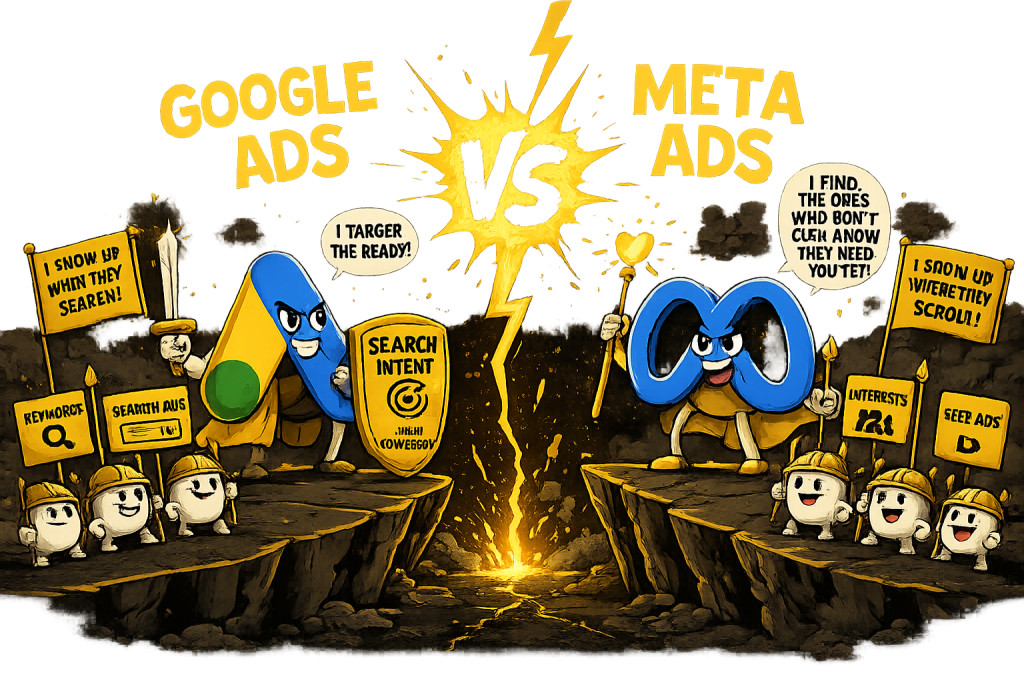
Google Ads captures existing demand
Someone types a query into a search bar because they already know what they want — or at least know the problem they’re trying to solve. Your ad shows up as the answer to a question they’re already asking. This is intent-driven marketing.
Meta Ads (Facebook and Instagram) creates new demand
Nobody is searching for anything. They’re scrolling through photos of their friends’ vacations, and your ad interrupts that scroll to introduce them to a product or idea they weren’t looking for. This is discovery-driven marketing.That single distinction explains almost everything else about how these platforms perform for different kinds of businesses.
When Google Ads Tends to Win
Google Ads shines when your customer already knows they have a need. Good fits include:
- High-intent purchases — plumbers, lawyers, SaaS tools, insurance, and anything else people search for the moment they need it
- B2B and considered purchases — buyers research heavily before committing, so search ads catch them right at the decision point
- Clearly definable products or services — if a customer can type what they want into a search bar, Google can put you in front of them
The tradeoffs: competitive niches like legal, insurance, and finance can carry a steep cost per click, and the strategy only works if there’s meaningful search volume for the keywords tied to your business. If nobody’s searching for what you offer, Google Ads has nothing to catch.
When Meta Ads Tends to Win
Meta Ads shines when your product benefits from being seen, not searched for. Good fits include:
- Visual, impulse-friendly products — fashion, home goods, food, beauty, and anything else that sells well through a scroll-stopping image or video
- New brands or new categories — if nobody’s searching for you yet, Meta can be the thing that introduces you
- Precise audience targeting — interests, behaviors, lookalike audiences, and retargeting people who’ve already visited your site
The tradeoffs: Apple’s iOS privacy changes (ATT) have made targeting and tracking noticeably less precise than they used to be, and ad fatigue sets in faster on Meta because you’re interrupting attention rather than answering a question someone already had.
A Simple Way to Decide
Ask yourself one question: Are people already searching for what I sell?
- Yes → Start with Google Ads.
- No, but it’s visually compelling and could catch attention on a feed → Start with Meta Ads.
- Not sure → Run small test budgets on both — even $10–20 a day each — and let the data tell you which converts better for your specific offer.
The Answer Most Marketers Land On
In practice, businesses that scale well rarely pick just one. They run both — Meta to build awareness and feed the top of the funnel, and Google to catch people once they start actively searching, including searching for the brand by name after seeing it on Instagram. The two platforms aren’t really competitors; they’re complementary tools that catch customers at different points in their journey.The best approach isn’t Google or Meta. It’s understanding your customer’s journey well enough to know which platform to lean on, and when.